JINPAT Integrated Slip Ring Solution – Enhancing Welding Performance
2025-11-28 16:34:43The U.S. welding industry continues to accelerate toward higher levels of automation, driven by automotive manufacturing, heavy machinery production, shipbuilding, and large-scale steel fabrication. As robotic welding cells, rotary positioners, and automated fixtures become standard across American factories, the demand for motion components that deliver uninterrupted signals, power, and air supply has sharply increased. Slip rings—particularly integrated electro-pneumatic solutions—play a vital role in ensuring welding systems operate with precision, speed, and reliability.
Modern welding relies on synchronized control of power delivery, data transmission, pneumatic actuation, and rotational movement. Even a momentary interruption can reduce weld quality, cause splatter or deformation, and compromise cycle-time efficiency. This is where JINPAT Electronics provides clear advantages. Our newly developed slip ring solutions—including the LPPL000-1006-01E2-02A and the hollow-shaft LPT050-0410-2805—are engineered specifically to support the performance demands of American welding automation systems.
The LPPL000-1006-01E2-02A integrates electrical circuits, air channels, and Ethernet communication into a single compact unit. With two pneumatic channels, ten 6A circuits, and a dedicated 100 Mbps Ethernet line, it ensures coordinated control over welding torch actuation, gas supply, rotational fixtures, and process monitoring. American welding integrators value strong ROI—and this product directly supports that by reducing the number of installed components, minimizing wiring complexity, and lowering long-term maintenance requirements.
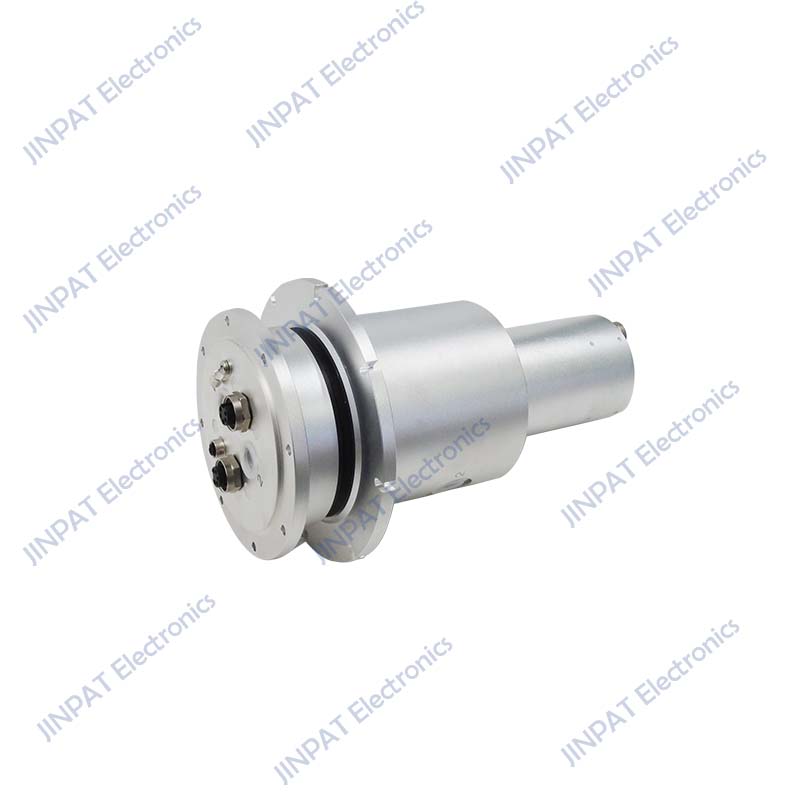
For heavy-duty rotary welding platforms, robotic positioners, and large-diameter fixtures, JINPAT’s LPT050-0410-2805 offers the ideal structural configuration. Its 50 mm through-bore allows cables or mechanical shafts to pass through, supporting flexible equipment layouts. With 4 circuits at 10A and 28 circuits at 5A, it meets the electrical needs of multi-axis welding systems while maintaining stable low-noise transmission even under continuous rotation.
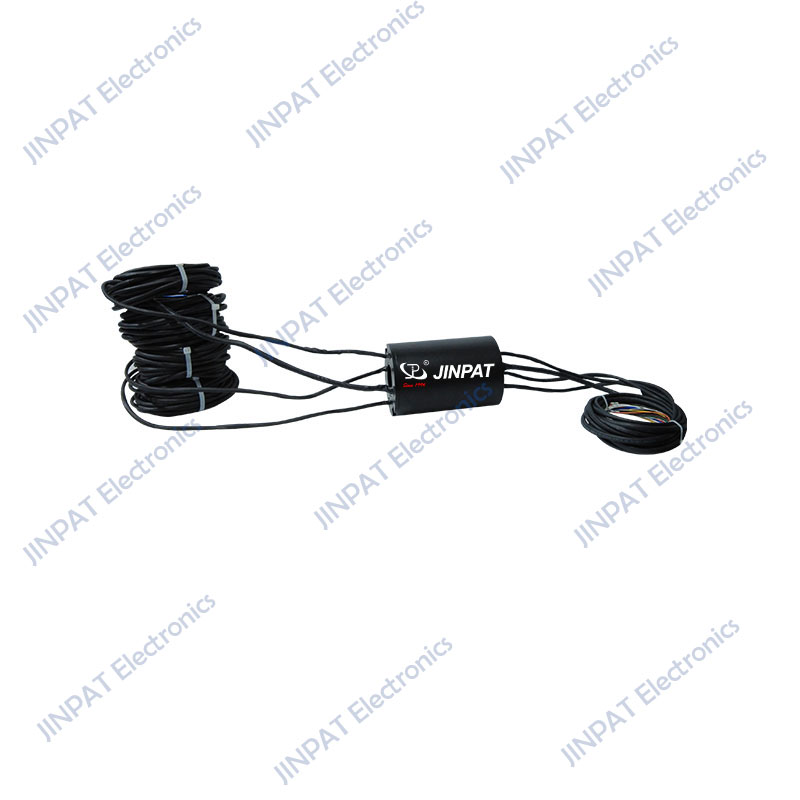
What sets JINPAT apart in the U.S. market is our combination of durability, engineering precision, and long service life. American welding systems often operate in high-duty cycles—sometimes 20+ hours per day—which places extreme demands on slip rings. Our products are built with wear-resistant materials, optimized brush technology, and advanced signal shielding to ensure consistent performance even in high-current, high-temperature environments.
Additionally, as more factories adopt networked welding systems, Ethernet stability has become a priority. The LPPL series’ isolated data channel prevents interference and ensures real-time monitoring and coordination with MES/SCADA systems common in U.S. smart factories.
From automotive assembly lines in Michigan to shipyards in Virginia and aerospace facilities in Washington, stable rotational transmission is essential for productivity. With JINPAT Electronics’ application-specific slip rings, U.S. customers gain higher welding consistency, reduced downtime, and better energy efficiency—leading to stronger overall competitiveness.