How to Choose the Right Through-Bore Slip Ring for LED Displays and Rotating Signage
2026-02-27 15:56:57In the vibrant commercial hubs of New York, Austin, and North Carolina, eye-catching rotating LED displays are the heartbeat of modern retail and trade shows. However, the biggest technical hurdle for engineers is often the same: How do you provide continuous power and data to a 60-foot LED strip or a spinning wheel without tangling the wires?
The answer lies in the Through-Bore Slip Ring. But not all slip rings are created equal. Based on recent inquiries from our U.S. clients, here is a professional guide to choosing the right solution for your 2026 projects.
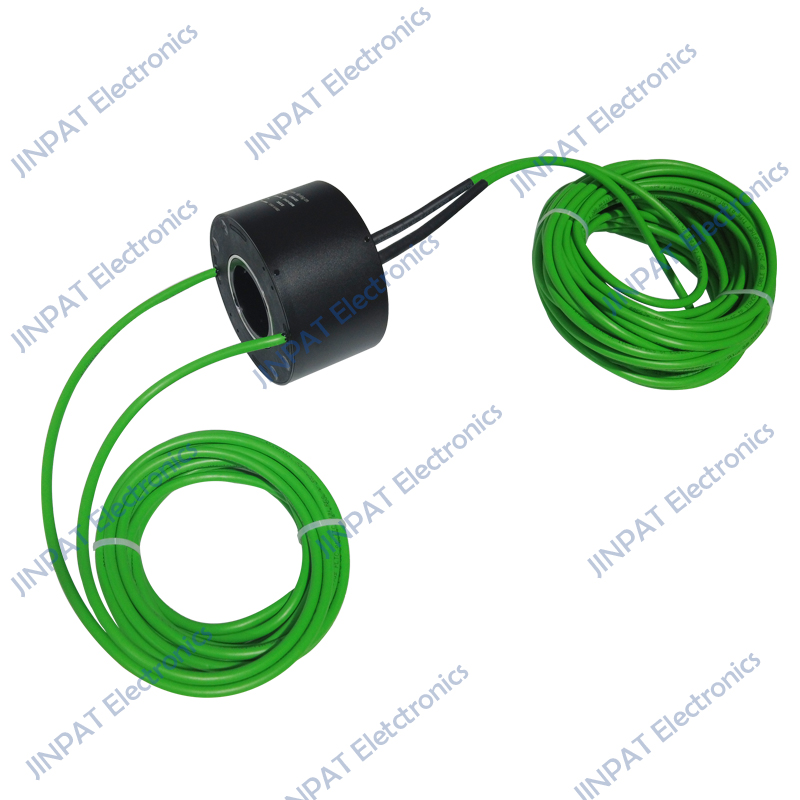
1. Understanding the "Through-Bore" Advantage
A through-bore (or hollow shaft) slip ring features a central hole. This allows you to mount the unit over a drive shaft or integrate pneumatic/hydraulic lines.
Application Tip: For a standard 6-foot spinning wheel or a large display turntable, a 25.4mm (1 inch) ID is the "sweet spot" for most mechanical shafts, allowing for a compact outer diameter (OD) under 100mm.
2. Matching Electrical Specs to LED Loads
We recently helped a contractor in Austin who needed to power nearly 60 feet of LED strips. Here’s how you calculate the "Safety Margin":
Voltage & Current: Most LED applications run on 24V DC. If your strips draw significant power, look for a slip ring rated for at least 10 Amps per circuit.
Circuit Count: While a basic LED setup needs only 2 circuits (Power/Ground), we recommend a 3-circuit or 6-circuit configuration. This allows for redundant grounding or separate control signals to prevent flickering.
Signal Integrity: If you are running analog signals for weighing equipment or sensors alongside your LEDs (e.g., a 20-channel requirement), ensure the slip ring uses precious metal contacts to minimize electrical noise.
3. RPM and Durability: The "Set It and Forget It" Factor
In the U.S. market, labor costs for maintenance are high. You don't want to replace a slip ring every six months.
Speed: For display cases, a low-speed rotation (50 to 100 RPM) is standard. Choosing a slip ring rated for these speeds ensures a lifespan of tens of millions of revolutions.
Protection: If your display is in a high-traffic or industrial area, look for an IP54 rating to protect against dust and moisture.
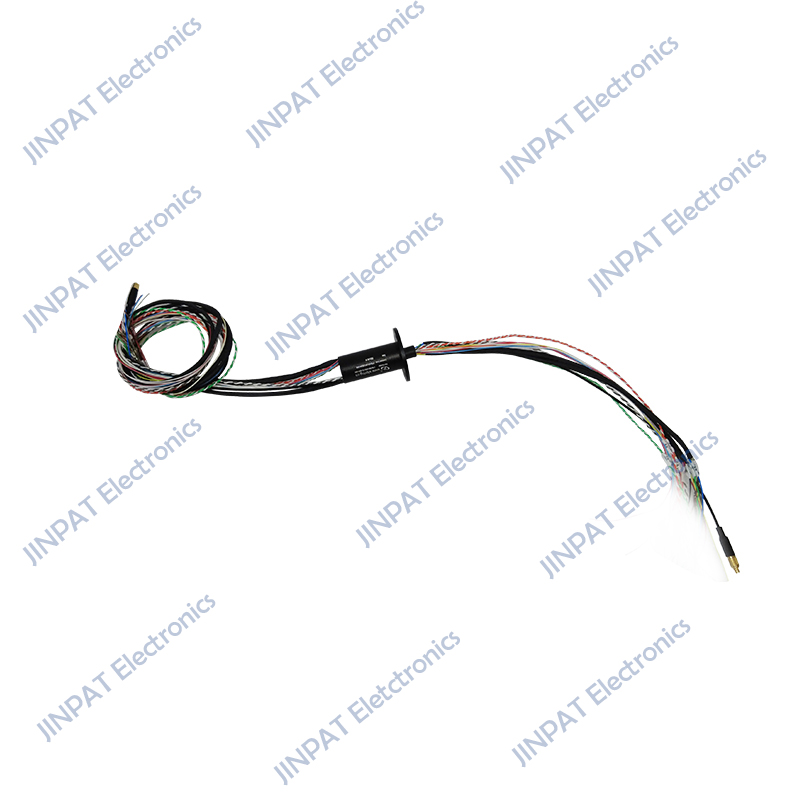
Client Case Highlight: > A non-profit school in Hawaii recently reached out for our LPM-30 HDMI slip ring for their design lab. This highlights a growing trend: the need to transmit high-definition video through rotating joints without signal loss.
Why Choose JINPAT Slip Ring?
We specialize in bridging the gap between high-end engineering and practical applications. From 400A high-current units for cable reels to miniature capsule slip rings for HDMI, our products are designed to survive the rigors of the American industrial landscape!
Ready to power your next rotation?
[Contact our Engineering Team today for a custom CAD drawing or a Sample Quote!]